The science is unequivocal: the first few years of life, from gestation onward, lay the very foundation for a person's entire future. This period doesn't just influence a child's health; it directly shapes their capacity for learning, their ability to form relationships, their resilience in the face of adversity, and even their long-term social and economic outcomes.
The environment surrounding a young child is the architect of their developing brain. Positive, nurturing, and connected experiences build strong neural pathways, fostering cognitive and emotional skills. Conversely, negative or adverse experiences can impair this delicate development, increasing the risk of poor health and social outcomes later in life.
This leads to a powerful and often overlooked truth: by empowering all adults who connect with young children, we empower the neurodevelopment, health, and well-being of those children and, by extension the very fabric of our future society. Skills like self-regulation, problem-solving, and mental resilience don't magically appear. They are learned, primarily from the adult caregivers in a child's life. So, the critical question becomes: who is empowering these caregivers?
A Global and Local Response
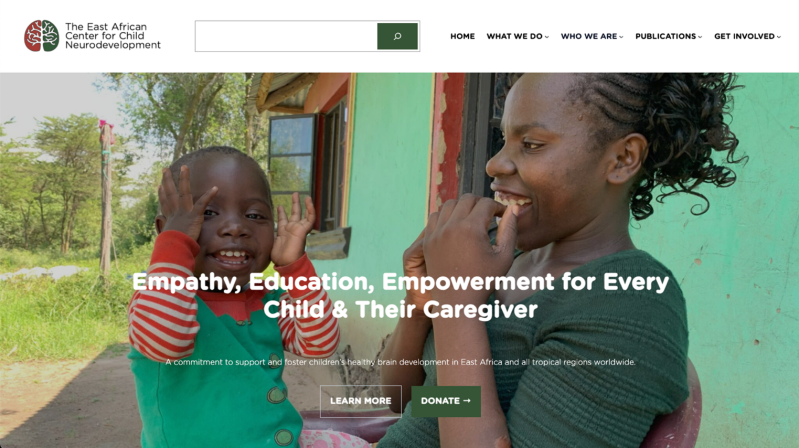
This is the core mission of organizations like the Global Centre for Child Neurodevelopment and its partner, the East African Centre for Child Neurodevelopment (EACCN). They operate on the frontline of this crucial work, translating the science of early brain development into tangible action where it's needed most.
The EACCN envisions a world where every child feels safe, connected, and cognitively empowered to resolve conflicts in a healthy, sustainable way. They believe in equal opportunity for all children to reach their full developmental potential.
But how is this vision turned into reality?
The answer lies in a simple yet profound strategy: coaching the adults. The EACCN equips parents, grandparents, and community caregivers with two essential tools:
-
Key Knowledge: An understanding of brain development and the critical importance of the first 1,000 days of life.
-
Practical Skills: The ability to promote safety, connection, and self-regulation in the children they care for.
A Groundbreaking Initiative in Kisumu
A powerful example of this mission in action is the ongoing work in Kisumu, Kenya. In a landmark partnership with the Kisumu County Public Health Department, AMREC, the EACCN is directly reaching over 600 households.
This isn't a vague awareness campaign. It is a focused, hands-on intervention where families are being guided through the principles of conscious discipline. This approach moves away from reactive or punitive parenting and toward a model that builds a child's executive functions and emotional intelligence from the ground up. By integrating this work with the public health system, the EACCN ensures it is sustainable, culturally relevant, and reaches deep into the community.
This partnership is more than a program; it's a promise. A promise to hundreds of children that their future will be built on a foundation of understanding and nurtured connection. It’s a testament to what can be achieved when a global vision is met with local action and strong governmental partnership. The Partnership is Saving Brains for Kenya!
So, who cares about the neurodevelopment of future generations?
The EACCN cares. The Kisumu County Public Health Department cares. The hundreds of parents learning new skills care. Can you be the next?
And by supporting this work—whether through partnership, advocacy, or resources—we can all play a role. We can all be the ones who care enough to build a better world, by building up children through the adults who love them. The future, quite literally, depends on it
Add comment
Comments
Yes! This approach works! We can’t wait to build and scale the model that Kisumu County Public Health is piloting.
Indeed parents/guardians can be trained to unlearn harmful habits that hamper the neurodevelopment of children. This - obviously is not a walk in the park, but at the same time, not impossible either. However it requires a multi-sectoral approach for posterity. Shalom